
A View from the Studs
3 months after a housefire things have reached new normal.

First, I need to apologize for the radio silence here at Illiquid Assets. It’s been busy.
It’s been over three months since a fire gutted our home, and a lot of you have been asking for updates. It’s not just the physical tasks keeping me too busy to respond; it’s the sheer cognitive load of the whole situation. When your life gets turned inside out on a random Tuesday, your mental bandwidth drops to zero. Interest in the market and economics falls off pretty hard when you’re just trying to figure out where you’re sleeping next week.
But we’ve finally found a sense of a new normal, and the bottom line is the same as it was the day after: Everyone is safe. Erin, our son, the dogs—we all made it out, and at the end of the day, everything else is just stuff.
Here is exactly where things stand, how we got here, and why—despite the chaos—we are doing completely fine. If you missed the initial story you can read it here.
Two Left Hands Covered in Thumbs
The number one question you get after “Is everyone okay?” is always: ‘How did it start?’
I was there when the fire inspector conducted his walkthrough. It started at an electrical outlet in our closet pantry. That specific section of the house had been wired decades ago by a previous owner. I know from my own 19 years of working on that house that he was a DIY handyman—albeit one with two left hands covered entirely in thumbs. We knew some of the wiring in the house was quirky, but it had survived over 25 years that we know of without an issue. Then, out of nowhere, with zero changes to anything, that outlet just went into meltdown.
You could see the hole burned into the drywall where the temperature reached thousands of degrees in seconds. A wooden coat rack full of coats right above it provided the perfect fuel, the flames crawled up the wall, and away it went.
The immediate aftermath was a three-week stint in a single hotel room. If you want to test the structural integrity of your family unit, try putting two adults, an eight-year-old, and two dogs who love to bark at every hallway footstep into a single room for twenty-one days.
But you have to hunt for the micro-wins in those situations. For me, it was the hotel breakfast. I started getting up at 6:00 a.m. when the coffee got brewed, sat in the lobby, watched the news, and knocked out brewery emails in the quiet. By 7:30, I was making fresh waffles for my son as he woke up. You take the wins where you can get them.
Eventually, the walls started closing in a bit. Our insurance policy covers “loss of use” housing for up to a year, but actually finding a place in this tight housing market is a completely different story. After a couple of weeks of striking out on single-family homes with yards, I took the reins from the relocation company and tracked down some high-quality townhomes on the south end of town. We signed the lease, and on a Monday morning, the relocation company’s box truck backed into the driveway.
A crew showed up in a big box truck and basically unloaded a templated version of a functional life: beds, couches, TVs, pots, pans, dishes, and towels. You go from having nothing but the hand full of salvaged clothes still giving off smoke, to having a fully operational household delivered to your door in a single morning. We felt incredibly blessed.
Pro Tip
I can’t state enough how everybody in this process has been fantastic. My insurance agent, the adjustor, the relocation company, the personal property cleaning company, reimbursement specialists, and our remediation/builders John Grace Construction. They have all been efficient, empathetic, and easy to work with. I have friends who have had very different experiences with this process and we are grateful for all of them. If you are in West Michigan and want a great agent/team call my guy Alistair Lynch with Farm Bureau. Alistair and I worked together 25 years ago and he has been a good friend since.
Curious friends have asked me what they should check for their own insurance. Here is my advice; meet with your agent and discuss your policy. The past 6 years of inflation have made everything much more expensive and you may be short on coverage if you haven’t updated your policy. Make sure your replacement cost is sufficient. Make sure your personal property coverage is good including any call outs for specific high value items. Make sure you have “loss of use” on your policy which covers the relocation and everyday expenses that I mentioned above. All in with cleaning, demo, reconstruction, upgrades, personal property, and loss of use, the total cost of of our event is going to be north of $600,000. You don’t want to be on the hook for that to save $500 a year on your premiums. Finally once a year walk through your house and take a video of everything from pictures to closets to storage. We were able to inventory our smoky remains. but if you lose everything it’s very difficult to remember what you had and proving it is even harder.
The Eleven-Year Purge
That brings us to the first major silver lining of this entire ordeal: the Great Purge.
I started planning the brewery back in 2015, opened the doors in 2017, and honestly haven’t had many days of real downtime since. When you’re grinding out a small business every waking hour for a decade, your home life takes a back seat. Tools from the original brewery buildout, random equipment, and eleven years of accumulated household clutter had been piling up in our basement and garage. It was a constant, nagging stressor. Easy enough to ignore until you are looking for something you need. I distinctly remember telling my shrink a few weeks before the fire that I had finally made my peace with the fact that the mess wouldn’t get organized until I retired.
The fire forced our hand. Before the restoration crews could even start, I spent three weekends throwing things away to my heart’s content. I filled one and a half 15-yard dumpsters with pure clutter. The items that didn’t need to be inventoried. It is an incredibly aggressive way to get organized, but clearing out a decade of physical noise was a massive psychological victory.
When the insurance inventory company arrived to price out our personal property for the payout, my inner ADHD overachiever kicked into high gear. Normally, an inventory takes a couple days and many days of work on their end. Instead, I emailed the rep an 800-line master spreadsheet detailing the replacement value, age, and category of every single item we owned. When she showed up for the inventory we spent 20 minutes on-site taking pictures and said, “Your list looks great, this is easy.”
Because I took control of the process, the actual cash value lump sum for personal property was approved and paid out relatively quickly. And that’s the next bright spot: we now have the rare opportunity to replace everything at once. No mismatched furniture accumulated over twenty years. Insurance pays you a depreciated value and then as you recoup goods you get the remainder of your expense in future payments.
Ripping It Down to the Studs
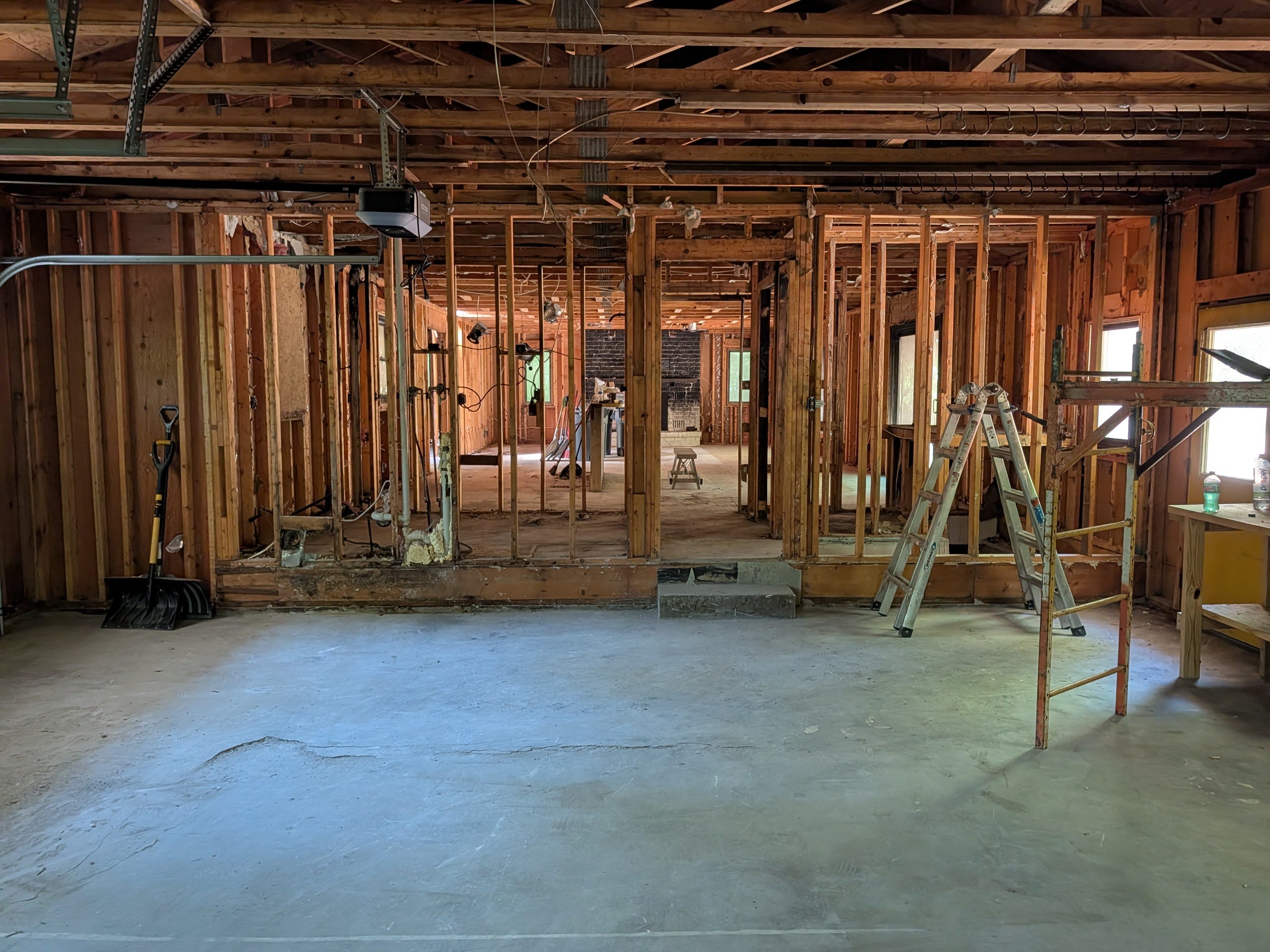
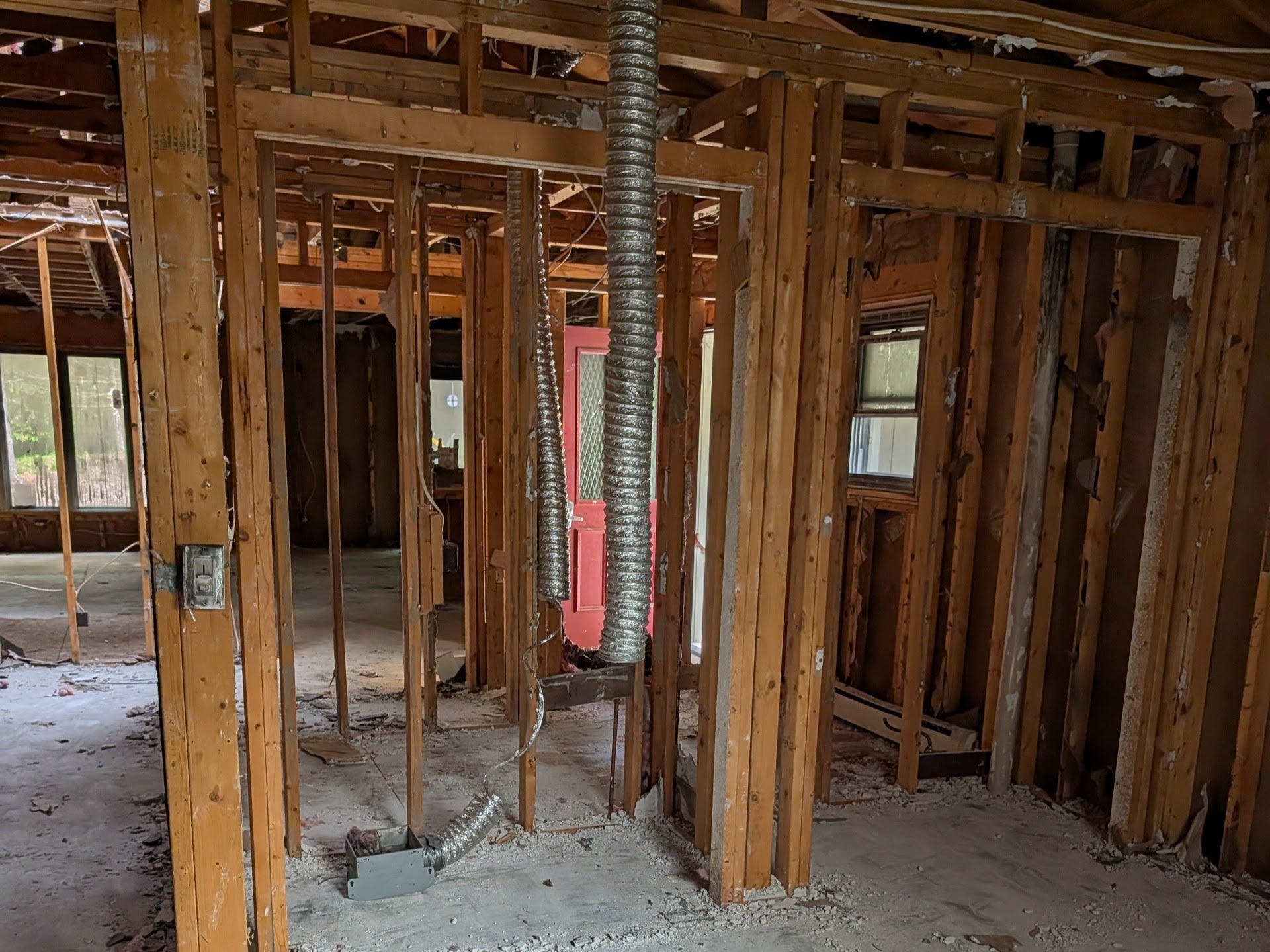
Right now, we are staring at the framework of the past and future. In a matter of five days, a crew of a dozen guys took our house from a charred, smoky mess down to nothing but bare studs.
Walking into that shell for the first time was deeply disorienting. You live somewhere for twenty years, and suddenly you have to scratch your head to remember where the bathroom wall used to be. It’s unnerving to stand in your garage and look straight through the skeleton of the house to your back bedroom, but it’s also a beautiful sign of progress. Next week, they scrub and then shellac every square inch of exposed wood—from the subfloors to the rafters—to permanently seal in any remaining smoke odor, and then the rebuild begins.
Of course, rebuilding a house in a post-pandemic, post-inflation world is a completely different animal than it was five years ago. My background usually taught me what it used to cost to pay the man, but today’s prices are wild. You start with a long list not knowing if you can cover all or just a few of those projects. Insurance pays to put you back exactly where you were, but we want to make some serious upgrades while the walls are open.
That led to the ultimate banking bottleneck. I went to our original lender to update the home equity line of credit we used to open the brewery, only to hit a wall. Traditional banks won’t touch a house that’s a burnt-out shell because it won’t appraise. I had to spend weeks making phone calls, researching, and pulling levers, but we finally secured a much larger line of credit from a different lender to fund our improvements. The permit is submitted, the septic system upgrades are scheduled, and the blueprints are set.
Anyone who has ever built a home will tell you it’s a stressful, grueling process that takes a year of planning before you even break ground. We are basically building a brand-new house inside an old frame, navigating a clunky three-way escrow process between our builders, the insurance company, and the banks—and we have exactly one year from start to finish to execute it.
The Ultimate Business Continuity Test
It is a lot. But the only reason I am able to maintain my sanity through all of this is because of the team we built at the brewery.
Before the fire even happened, I had already planned to take some intentional time away from the business this summer. My assistant brewer, Casey—who doubles as a school teacher during the school year—takes over the heavy lifting in the brewhouse the second school lets out. The fact that he and the rest of our staff have completely stepped up to run the day-to-day operations without me needing to manage all of this has been an absolute lifesaver.
There is a massive operational lesson here for any small business owner: Hire people you can trust with your entire livelihood. Not just so you can take a vacation, but because life has a funny way of sneaking up and biting you when you least expect it. If your business can’t survive you stepping away during a personal crisis, you don’t own a business—you own a demanding job.
We are not out of the woods yet. I still have to answer a million questions regarding paint colors, doorknobs, and flooring over the next few months. But the trajectory is right, the family is safe, and we are incredibly grateful for the avalanche of support from everyone who has reached out.
Since the markets tend to hit a summer lull and my mind is a bit too frazzled for deep thinking, I’m going to use this space over the next few months to do something I’ve wanted to do for a long time. I’m launching a summer writing series breaking down the raw, unvarnished history of how we built the brewery from scratch—the setbacks, the heartaches, and the brutal lessons of turning an idea into bricks and mortar. I have done an event for this in person a while back and people seemed to really love all of the backstories. There is a good chance this will become the framework for a book about those stories.
Stay tuned. It’s going to be a wild ride, but as we’ve proven over the past decade, we know a thing or two about building from the ground up.