

I think we’ve covered enough of the nitty-gritty background. The psychological groundwork is laid. Let’s get into the fun part.
Let’s talk about the beer.
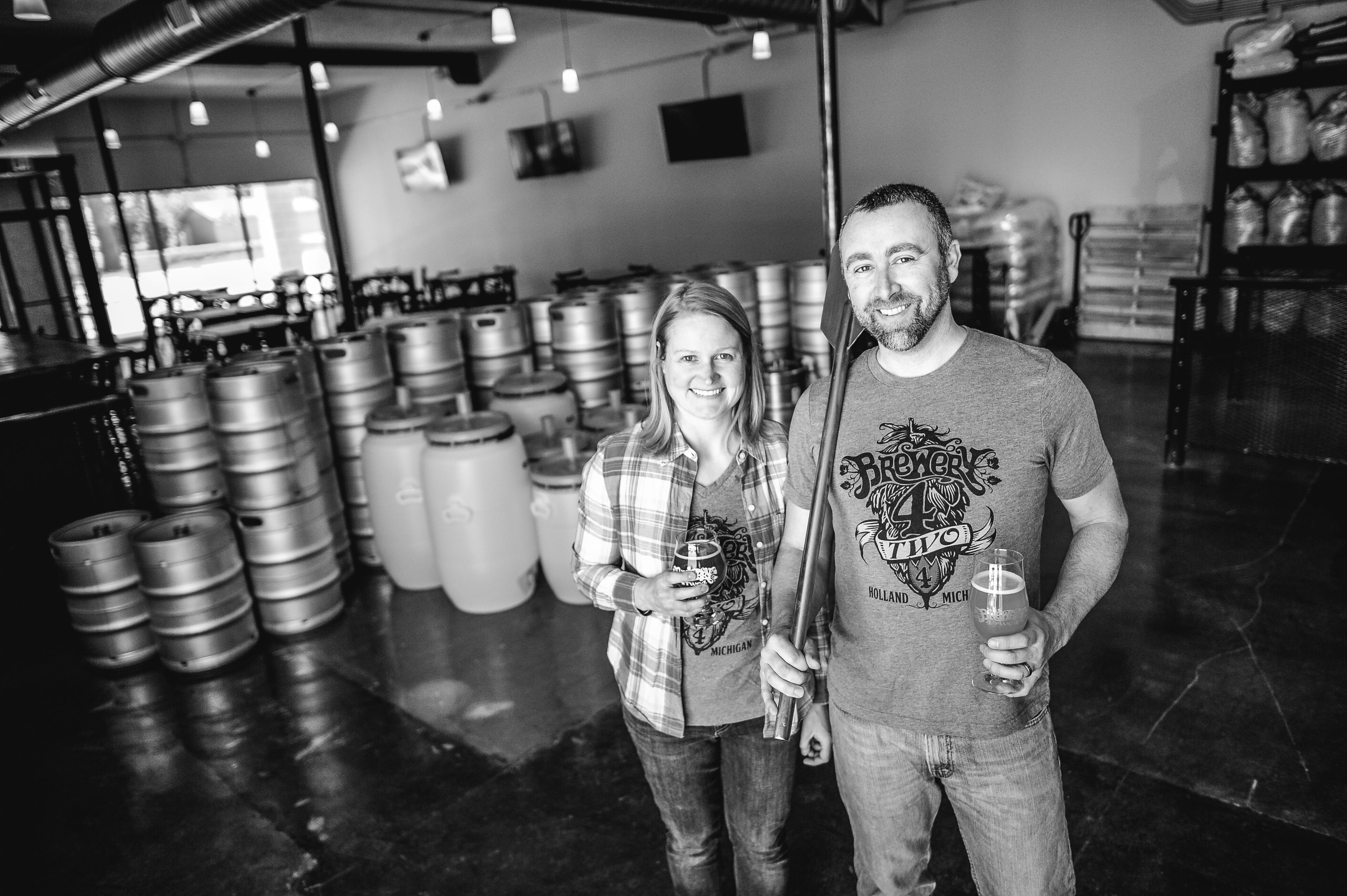
I mentioned earlier that during my sophomore dumpster-fire year at Grand Valley State, my beer preferences consisted almost entirely of Milwaukee’s Best. After all, it says “Premium” right on the can, so who was I to argue? It is a pretty massive stretch to go from hauling thirty-racks of “The Beast” into a college apartment to becoming a proficient brewer and craft beer aficionado.
So, how exactly did I get there?
It started with a look of absolute disgust. During our sophomore year, my roommate and best friend, Andy, had gone to London for a study abroad program. While he was over there, he developed a taste for British pub culture. He came back to the States drinking the likes of Guinness, Fuller’s ESB, and Beamish.
I distinctly remember the first time he made me try a Guinness upon his return. I took a sip, and I am pretty sure my face turned completely inside out. I hated it. I had not developed any kind of palate for bitterness. I didn’t like roasty flavors, and I wasn’t even a coffee drinker at the time. There was absolutely nothing appealing about that thick, dark liquid to me.
So, my evolution wasn’t exactly a fast turn. But Andy’s curiosity for different styles planted a seed.
Barside Founders
By the time Andy and I both turned twenty-one, we were working at Kent Country Club on the northeast side of Grand Rapids, but we were living all the way on the southwest side of town.
Geographically, sitting exactly right in the middle of our commute was the original location of Founders Brewing Company.
If you know anything about craft beer today, you are deeply familiar with Founders. They became one of the largest craft brewers in the entire country before eventually being majority acquired by a European macro-brewer. But back then? They were just a little fella.
We made the old Founders taproom an almost daily habit. We were regulars sitting at the bar, soaking in the atmosphere. As one naturally does when exposed to a constant rotation of craft beer, you start trying things. My palate finally started to wake up. I officially swapped out Milwaukee’s Best for Sierra Nevada Pale Ale, which was my gateway drug into the wider craft world.
I was far from being a craft beer snob, but I was officially “craft curious.” It was the beginning of a hobby that would grow aggressively alongside the industry as the American craft beer boom began to take shape. I found myself traveling to more breweries, trying different styles, and learning how flavors were built.
I started to really appreciate the history, the cultural background, and the culinary science of it all. I wanted to know why these beers tasted the way they did.
My Future Wife, The Brewer
It wasn’t too many years after that era that I met Erin, who would become my wife.
There were a lot of things about Erin and I that clicked immediately. She is originally from Wisconsin, just like my entire dad’s side of the family. She was a die-hard Packers fan, as was I. She was also a two-sport college athlete at Ripon College, competing in basketball and track. Because she was an athlete, she implicitly understood the weird, psychotic coach’s mindset I operated under. She understood the grind.
Also, anyone familiar with the Midwest knows that Wisconsinites do not play around when it comes to drinking.
At the time we met, Erin had just finished grad school at UW-Green Bay and moved to Michigan to pursue a job in the Lansing area. On our first date, I walked into her place and was more than pleased to find that she had a functioning kegerator right there in her house. She had bought the place, was renting rooms out to several friends, and it definitely still maintained a fun, grad-school party vibe. The half-barrel of Labatt Blue sitting inside the kegerator fit the aesthetic perfectly.
Many of our early dates consisted of going to local breweries, sampling flights, and enjoying the scene. But here comes the really important part: Erin and her roommates had a homebrewing setup.
They lived not terribly far from one of the legendary, early homebrew shops in Michigan called Things Beer over in Williamston. They had begun brewing their own batches, honestly, probably just to keep the overall cost of beer down for the house.
So, I often tell people it is an absolute truth: I learned how to brew from my wife.
Initially, it was just a fun little weekend activity. But eventually, when Erin and I moved in together and bought a house on the lakeshore in 2006, we started actively amassing a serious homebrew equipment collection. Most homebrewers will tell you that the gear acquisition never really ends. You get to a point where you have everything you functionally need to make liquid, but there is always something bigger, shinier, and more precise that you can buy.
We bought all the stuff.
By the time we settled on the lakeshore, I was brewing at home a lot—usually a couple of weekends a month. I had built a massive custom kegerator that held six Cornelius (”corny”) kegs, meaning we usually had three, four, or five different taps of homebrew pouring at any given time. This is incredibly handy when you’re young, childless, and hosting parties.
It was through these constant repetitions in the garage that I truly fell in love with the process. Brewing is equal parts cooking, chemistry, and art. You have to have a grasp on all three to be any good. Understanding the chemistry is vital to making clean beer that is actually repeatable, and having culinary creativity is the only way you grow beyond just downloading other people’s clone recipes from the internet.
I became pretty solid at it. I was making custom beers for friends’ birthdays and weddings. I was brewing so much volume that we ended up giving most of it away just so people could try it and give me feedback. I wasn’t actually interested in drinking five gallons of my own pale ale; I just wanted a 12-ounce pour, a notebook for flavor notes, and the runway to start the next batch.
And unlike a lot of homebrewers, I kept drinking every commercial craft beer I could get my hands on. I think that is a key to keeping yourself in check and not becoming “homebrew-blind.”
Soup to (Beer) Nuts
A regular haunt for Erin and me at the time was the 8th Street Grill in downtown Holland.
This was the early days of the craft boom, and Holland—with its incredibly conservative, Dutch Christian Reformed population—was naturally going to lag behind the rest of the country when it came to alcohol trends. 8th Street Grill was a fascinating dichotomy. On one hand, it was known as an old people’s hangout. They had an all-day soup bar, senior discounts, and the elder population of downtown literally ate it up.
But Mike, the owner, saw where the beer market was going. He started bringing in more and more craft options. Eventually, they started getting allocations of rare beers that were hard to find anywhere else in West Michigan. It was the place to be for beer in Holland at the time.
We were in there enough to be on a first-name basis with basically all the bartenders. We met dozens of “beer friends” sitting at that bar who are still our good friends—and loyal taproom customers—to this day.
One of those bartenders was a guy named Clay.
There was a brand-new startup brewery in planning just down the street called Our Brewing Company, and Clay was going to bartend there as well and was very excited about the new addition downtown. He had gotten to know the owners, Trevor and Dane, during their build-out phase.
Crucially, Clay had also drunk a fair amount of my homebrew. He knew I wasn’t just messing around in my garage; I could actually make some highly drinkable beer. So, Clay introduced me to Trevor, Dane, and their head brewer, Ed.
I brought over a load of my homebrew one day, and we all hung out in the basement brewery at Our Brewing, chatting, drinking, and having a grand old time.
This was right before they officially opened their doors to the public. Like almost everyone in this industry, they were opening on a total shoestring budget. Because capital was tight, they had decided to launch the brewery using a half-barrel Sabco Brew-Magic system. The Sabco is a legendary little pilot system that has launched several successful breweries, but during the absolute height of the craft beer boom, relying on a half-barrel system to supply a commercial taproom was incredibly, painfully undersized.
Opening night at Our Brewing was absolute chaos. The place was packed to the walls, with a line out the door. It became painfully clear about two hours into the shift that they were going to burn through a stock of beer that was supposed to last them for two weeks in a single weekend.
After enjoying a few too many of those beers myself while sitting at the packed bar, I leaned over and half-drunk blurted to Trevor: “Hey, if you guys ever want me to brew to help catch up... let me know.”
Trevor didn’t miss a beat. “Sweet. I’ll see you Sunday.”
Sunday Slow Jams
Trevor and I started brewing together on the weekends just to keep the taps flowing. Ed would brew his brains out during the week, and Trevor and I would knock out a batch or two on Sundays. It was just a side gig to help out some guys I liked. I’d come up with the occasional recipe, and we’d listen to a lot of R&B slow jams while mashing in. That became our Sunday ritual for three or four months until their order for larger commercial equipment finally arrived.
Through that basement apprenticeship, I got to meet a lot of other people in the local industry. OBC took me to several beer festivals where they were pouring. I got to stand behind the jockey boxes, talk to actual customers, and watch complete strangers enjoy a beer that I had a hand in creating.
That feeling is infectious. It grabs ahold of you.
It started to pop into my head: Maybe I could actually do this professionally.
At one point, I even approached Trevor about the idea of buying in as a partner at OBC. They were, for very obvious and mathematically sound reasons, not interested. A small brewery with two owners splitting the equity is already a tight squeeze; there isn’t a whole lot of pie left to take home. Adding a third mouth to feed didn’t make sense.
But that idea falling through planted the real dream in my head. I wanted my own place. At the time, I definitely didn’t have the financial resources to do it myself, so it remained a pipe dream. We’d go out for drinks with our good friends Nate and Haley, and we’d just toss around “what if” scenarios about what it would be like to own a brewery.
And that brings us right back to where we left off at the end of Chapter 3: at basketball practice with my assistant coach, “John Cash.”
John, the private credit/finance guy, became highly aware of my homebrewing obsession and my weekend moonlighting in the industry. Being the savvy financier that he is, he looked at me and said the magic words:
“So when are we going to open a brewery? You work up a business plan. We’ll figure it out.”
Now, for people like my wife and me—who were at the time incredibly straight arrows following a traditional track from high school, to college, to safe public sector jobs—the idea of tossing all of that stability out the window to launch a startup was horrifying. At least to me it was.
On top of that, as I mentioned in the very first chapter, I knew the brutal, unvarnished perils of owning a small business. I grew up inside one. I knew what it did to your schedule, your stress levels, and your family dynamic.
Erin didn’t have that specific childhood trauma. She was, perhaps, a little blissfully unaware of exactly how much of a psychological grind it actually is. Because of that, she pushed me toward the edge of the cliff a lot harder than I wanted to go myself.
I distinctly remember laying out the stakes to her. I was hyper-aware of the risk. I told her, “This is a massive gamble. Everything we’ve ever worked for could be gone. We are not going to have any days off, let alone weekends off, for years. It is going to be brutal.”
Erin looked right at me, and in her classic, no-nonsense fashion, snapped back:
“Well fine. We’ll just work our stupid government jobs the rest of our lives and never do anything cool.”
It was blunt. It stung. But it was exactly the wake-up call I needed to hear. She was already all in and believed I could do it.
You only live once. You have a guy with the funding ready to make it happen. He believes in you. Your wife is pushing you to take the leap. You are standing at the plate; you have to swing the bat.
So, John Cash and I started getting serious. We began talking about what the model would look like, what I needed to do to prepare, and how we were going to find a location.
The Non-Negotiables
Through the process of helping out at OBC, I learned a few very specific lessons about what I absolutely would not tolerate in a commercial building.
They brewed in the basement. They did not have a service elevator. When the grain delivery truck would arrive, they had to manually slide all the 55-pound bags of grain down the stairs. Then, you mash in. The grain absorbs the water, meaning that spent grain now weighs four times as much as it did when it was dry.
Now, all of that heavy, soaking-wet, boiling-hot grain has to go back up the stairs. They had to shovel it into five-gallon buckets, carry them up two at a time, and dump them into farm barrels outside.
As much as it is a good workout, I wasn’t going to do that every day.
Grade-level access and no basements became an operational non-negotiable.
On John’s end, as the finance and business guy, having the right premium storefront with high visibility was his absolute non-negotiable.
Finding a spot that checked my industrial requirements and his retail demands was going to make finding the right location more than a little difficult. Additionally, we very much wanted to stay on the north side of Holland, not downtown. But the north side doesn’t have cool, 100-year-old brick manufacturing buildings. It was all woods and farms 100 years ago. These factors made the building hunt very difficult. In fact, the building we are currently sitting in today holds a very special place in our history.
It was both the very first location I looked at, and the thirteenth.
But we’ll get into the details of the hunt in Episode 5.