

Up to this point in our story, having a brewery was really just a beautiful pipe dream.
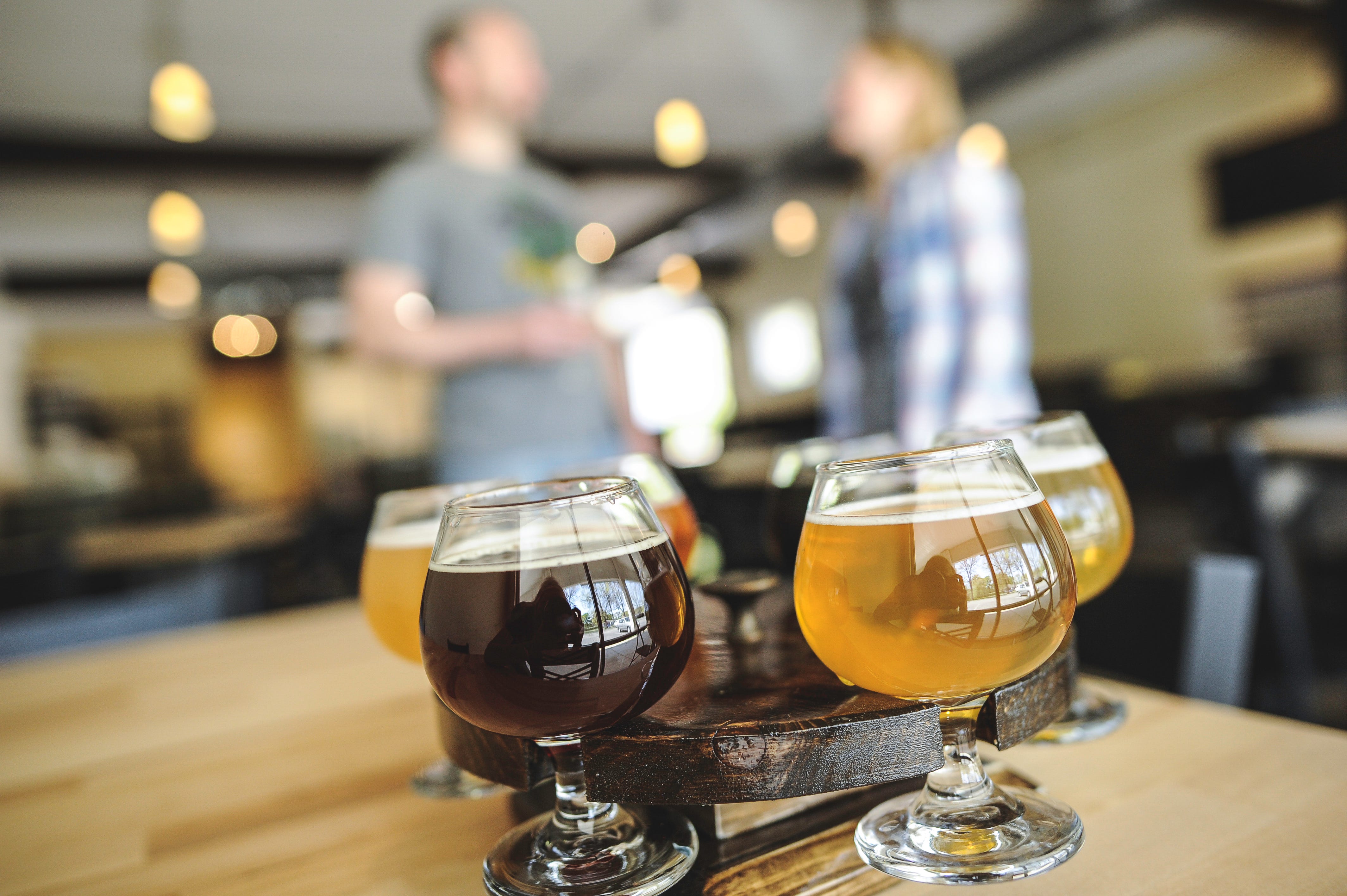
Before we officially crossed the Rubicon into business planning, Erin and I were just taking casual notes and snapping pictures of things we liked and hated at other taprooms. But it wasn’t real. It was a side hobby. Living the enviable lifestyle of dual income, no kids (DINKs), we spent a massive amount of our time and disposable income traveling to the great beer destinations of America.
Just about every single vacation we took was beer-centric in some way, shape, or form. We jetted off to Asheville, San Diego, Denver, Tampa, Boston, and the heavy hitters of the Pacific Northwest across Oregon and Washington. We even made a specific pilgrimage to coastal Delaware just to see how Dogfish Head ran their operation.
It was a great life. But eventually, it was time to stop drinking other people’s liquid, sit down at a desk, and organize those scattered notes into a real, breathing business plan.
At the absolute beginning of the process, I naively thought that putting the numbers together and securing a commercial location would be the easy part of the gig.
I was wrong. As I mentioned briefly at the tail end of the last chapter, the building the brewery currently sits in today holds a bizarre, frustrating piece of our history: it was both the very first location we explored, and the thirteenth. In the early going, it felt like every single piece of real estate we touched either completely fell apart or carried a massive, hidden flaw.
Looking back, maybe that should have been an omen. Because as this story progresses, the real estate hunt only gets worse. If this were a work of fiction, you’d probably put the book down because the plot points feel too over-the-top. But reality has a funny way of being stranger than fiction.
321 Douglas, Suite 120 (Take One)
Our current home at 321 Douglas, Suite 120, was the literal starting line. It was a space I already had my eye on for two very distinct reasons.
First, it checked the physical boxes for my partner John Cash and me: great visibility, high traffic counts, an end-cap unit, and most importantly, no miserable basement to haul spent grain out of. At this stage, we hadn’t fully decided if we were going to run a full food operation or stick strictly to the beer only model. John, being the savvy businessman he was, wanted a food revenue stream, but he wanted it high-margin and mechanically simple.
Our grand strategy? Hot dogs.
It required a tiny footprint, it was fast, and it was easy. We wouldn’t need an industrial dishwasher or a front-of-house serving staff, but we could still capture a quick lunch crowd.
The second reason I loved the location was a deep personal connection. My best friend and former college roommate, Andy, had initially grown up right here in the Holland area before his parents separated and he moved up north, which is where we met. I had visited him down here during the summers over the years, so I was well aware of the building. More importantly, Andy’s dad, Rusty, actually owned the strip center along with several apartment complexes around town. I knew the landlord, I knew the building, and it felt like a total slam dunk.
When I sat down with Rusty to lay out our proposal, he liked the idea, but he had one small, reasonable request: stop into Sluggo’s Pizza next door and make sure the owner, Don, was cool with the plan.
What I didn’t know at the time was that my partner, John Cash, had already stopped in to be neighborly and talk to Don. And without thinking through the psychological connection between beer and pizza, the conversation had gone completely sideways. Don didn’t hear “small neighborhood craft brewery.” All he heard was: A packed taproom is going to steal all my parking and compromise my quick to-go lunch sales with their fast hot dog concept.
So, when I walked into Sluggo’s to clear the air, Don came at me absolutely guns blazing. He wanted nothing to do with us.
I tried to gently smooth things over, calm the waters, and ask if we could just start the conversation over from scratch, but they were absolutely not having it. Now, a grumpy neighbor didn’t technically eliminate the building from contention, but we were incredibly green in this process. I knew right then that I did not want to sign a long-term lease with a next-door neighbor who was already completely pissed off that we existed. That wasn’t the kind of cross-promotional food relationship I wanted to build.
On top of the toxic neighbor dynamic, that specific end unit had a persistent, ongoing roof leak. No one could figure out exactly where the water was coming from or how to fix it, which promised to be an operational nightmare if it wasn’t fixed.
With a hostile neighbor and a leaky roof in front of us, we decided to walk away.
Chasing Dead Ends
Remember, at this point in the timeline, we had no rigid blueprints. We had no real grasp on just how massive or how small this project was ultimately going to be.
With the Douglas property off the table, we immediately looked at an old Blockbuster Video location in a shopping complex on the corner of River and Lakewood. It was a much larger unit, but the visibility was solid. I pulled out my measuring tape, took down the specs, and actually sketched up floor plan drawings for the space. Because of the size, the hot dog plan was out; we would have built our own internal pizza kitchen and run a much larger, full-service establishment.
But as we got deeper into the weeds and started ball-parking estimates for a buildout of that size, the math began to unravel. Compounding the issue, the landlord was not super flexible on a few things we needed to execute, so we pulled the plug and walked.
Next, we decided to go completely against our geographic instincts and checked out the south side of Holland at a spot in Washington Square. It was a beautiful, historic space with a ton of character, but it violated the prime directive I learned during my apprenticeship at Our Brewing Company: thou shalt not brew in a basement. The building had an old timber construction, and trying to brew on the main floor with a hollow basement directly underneath it simply wasn’t structurally viable for the weight of the tanks. Strike three.
We kept hunting. We looked at a commercial space that was operating as a karate dojo. The internal specs actually checked out, but the unit was tucked squarely on the backside of the building. Sure, we could have put up a sign on the road, but the taproom doors were completely invisible from the main thoroughfare. John Cash immediately invoked the financier’s veto. He wasn’t about to deploy capital into a retail location that couldn’t leverage high-traffic road visibility.
Next, I looked at another unit right down the strip from the old Blockbuster location, but the layout was a total mess. It was far too tight, and the back alley access was entirely inadequate for a commercial truck to drop off raw materials and pallets.
By the time we walked away from an old outlet mall location due to the same exact trifecta of poor visibility, tight spaces, and predatory rent terms, we had looked at five or six different properties.
The Terrifying Pivot
We were only five or six locations deep, but it had already been at least eight months of constant grinding, measuring, and negotiating. The frustration was getting real.
Standing in the wreckage of half a dozen dead deals, John and I realized something fundamental about the market: a “beer-only” taproom simply wasn’t going to generate enough top-line revenue to survive the rent environment in Holland and be profitable without some real creativity. Ironically, this was an important realization.
But at the time? It was terrifying.
The small, simple taproom dream was officially dead. The model morphed into a massive, full-service restaurant brewery. I went back to the spreadsheet and tweaked the business model, which massively inflated our projected revenue, but also exploded our startup costs and daily overhead liabilities to a degree that honestly scared the hell out of me. It was way over my head.
But when you are running down a dream, you have to be flexible enough to realize that the destination rarely looks like the map you started with.
We set out into the wild looking for a piece of real estate that could handle a plan much bigger than we had ever originally envisioned. And while the first eight months had been an exercise in frustration, this is the exact moment where the timeline shifts from frustrating to flat-out ridiculous.
We’ll get into that in Episode 6.