

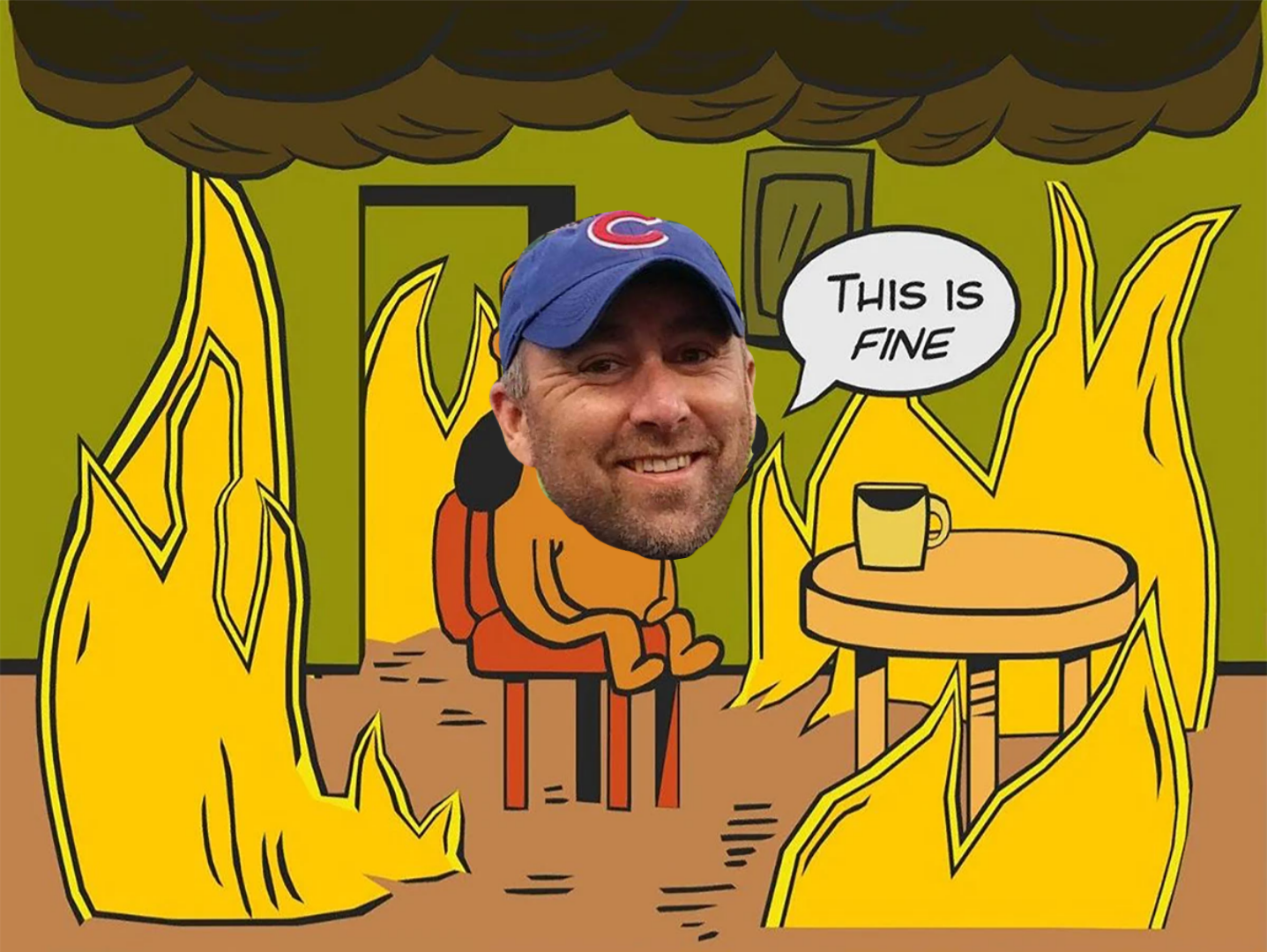
It had been a minute since my wife and I had been out for dinner. We were enjoying a cocktail on our way to a 6:30 reservation next door. I was halfway through a unique twist on a Negroni—the kind of drink you’re supposed to sip slowly and appreciate—when my phone lit up.
It was the babysitter.
She sounded out of breath. Exasperated. “There is a fire. I called 911. Everybody’s out of the house. The Fire Department is on the way.”
Hoping I was misinterpreting her, I ran outside to the sidewalk where it was quiet, trying to make the words make sense in my head. I called 911. Everybody is out. It clicked. This wasn’t a false alarm. This wasn’t a burnt piece of toast. There was a real, legitimate fire in my house.
I ran back inside, looked at my wife, and told her we had to go right now. I slapped a fifty on the bar and we flew for the door. Still inside the bar, she asked, “Is it Des?”
“No.”
“Is it the dogs?”
“No.”
Now officially outside, I told her the house was on fire. Panic set in.
The fifteen-minute drive home felt like three hours. You know that feeling when you’re racing against a reality you can’t see yet? Your mind populates the void with the worst-case scenarios. We rounded the corner approaching our house and it looked like a movie set—eight fire trucks blocking the road, one of them parked directly in my driveway. I told my wife to go straight to the EMS truck where our son, Des, and the babysitter were waiting.
I ran up the driveway and the visual hit me like a physical blow: thick, black smoke pouring out of every eave, every soffit, and the attic vents. You hear the cacophony of it—the sirens of more trucks coming, the alarms, and the sound of glass shattering inside as the heat does its work. They cracked a garage door and a solid wall of black smoke erupted into the air. Firefighters in full gear emerged, immediately ripping down the ceiling in the garage looking for signs of it spreading through the attic.
Our babysitter was a rockstar. Hannah—the daughter of my buddy Andy—had managed to get our eight-year-old out front and the dogs out back before things got too bad to do so. She saved more than just lives; she saved the chance for us to have anything left to return to.
The only one missing was the cat. We found him later after the flames were out, hiding in the lowest spot of the basement—the best place he could’ve been. He was fine, beyond being terrified.
Once the place was ventilated enough to breathe, I went inside with the fire captain. It was shocking. My entire home was black. Not “charred in spots,” but fundamentally transformed. The bathroom and the closet where the fire started were basically gone—non-existent. The light fixtures had gotten so hot they melted, hanging four feet down from the ceiling like a Salvador Dali painting. The mini-split air conditioner 35 feet from the fire got so hot it also had started a slow crawl down the wall. The shattered remains of the skylight litter the hallway due to the rising heat looking for an escape route.
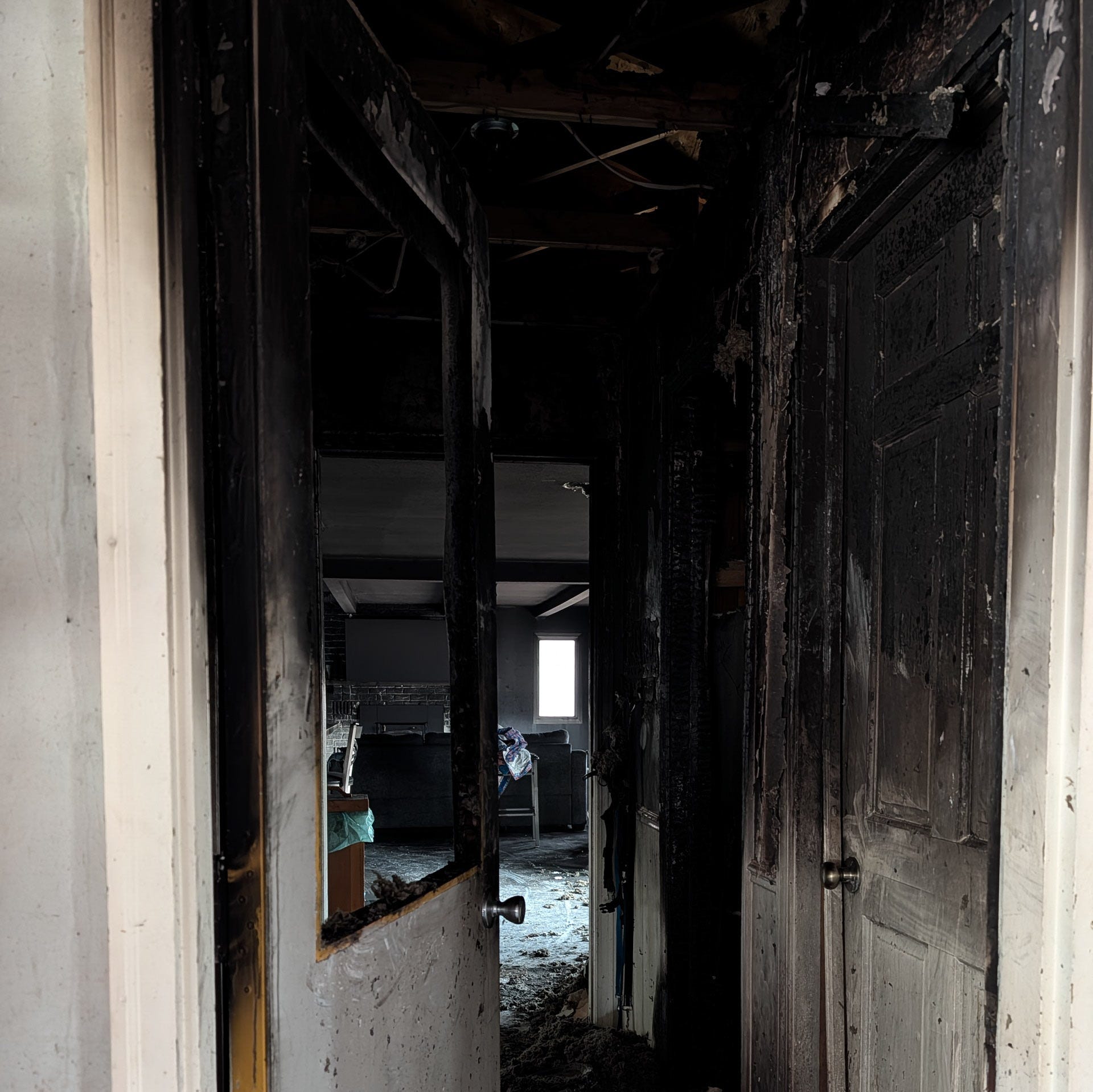
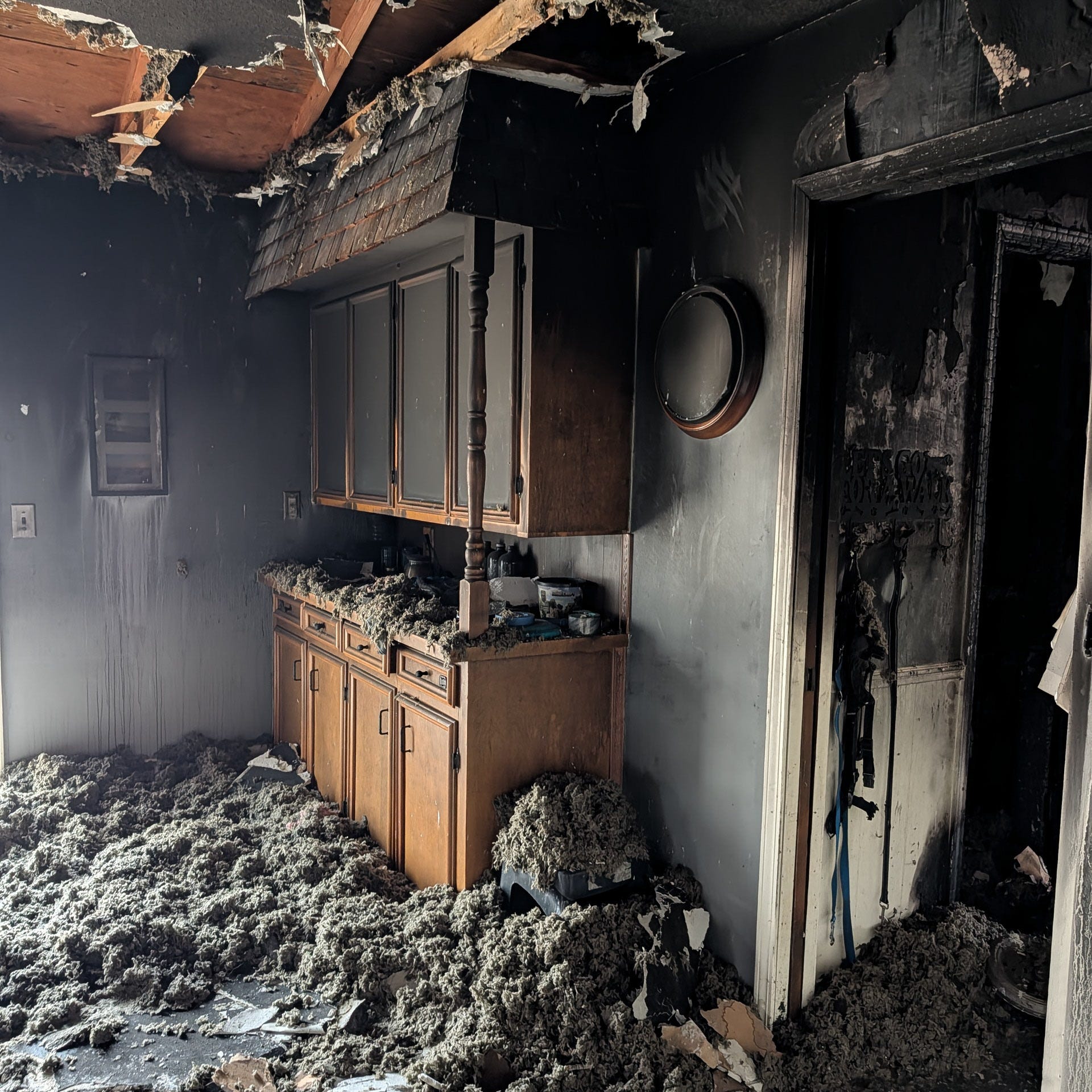
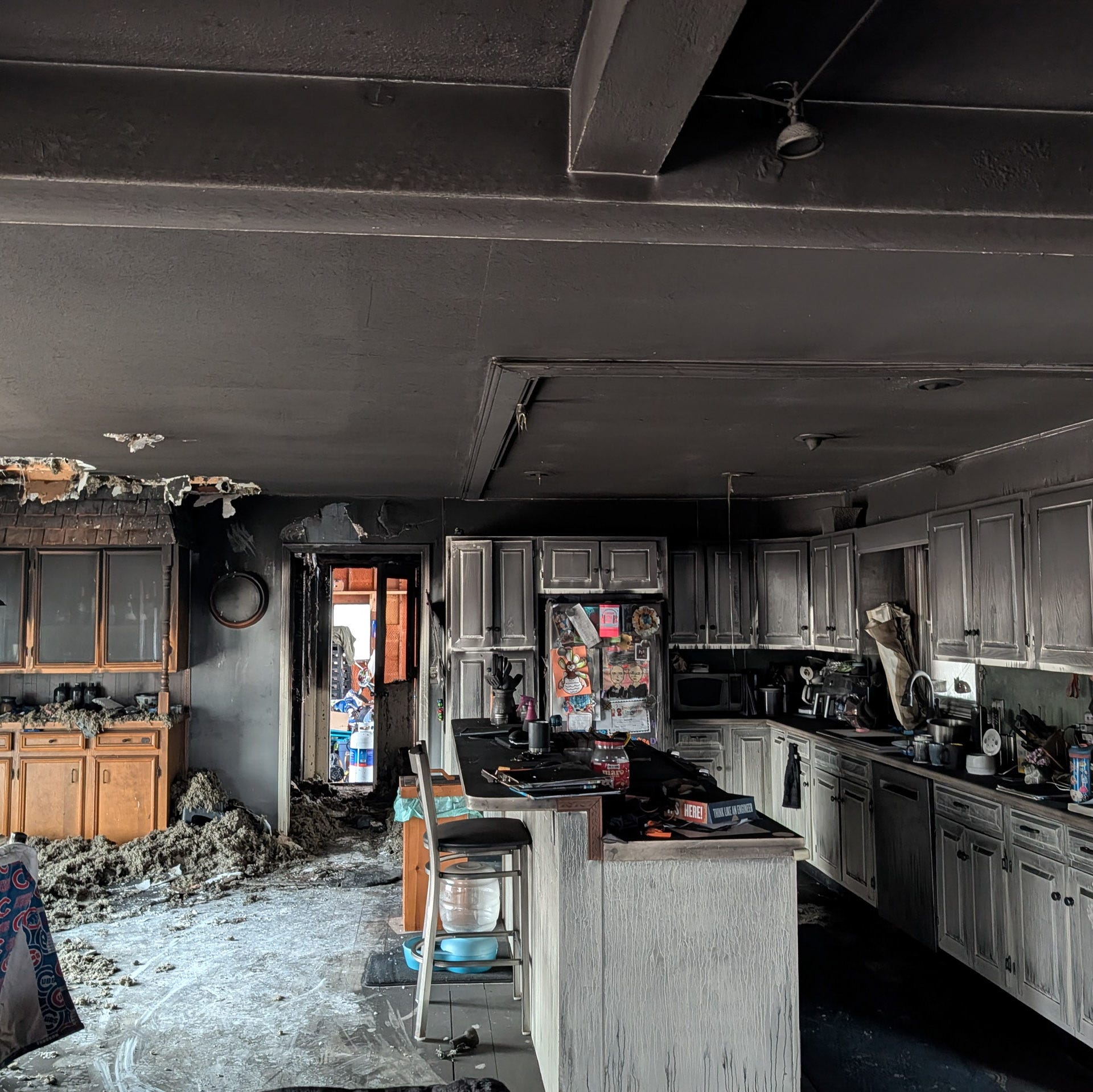
Firefighters were still hunting hot spots with infrared thermometers, ripping down the dining room ceiling. I headed for the basement to check on the cat and stepped directly into a half-inch of standing water. Everything we owned was either charred, melted, covered in toxic soot or soaked. In twenty minutes, the “stuff” was screwed. Reality had officially shifted.
The hoses eventually get rolled up. The firefighters spray the soot off their gear and head for the trucks. The captain shakes my hand, his face weary but professional. “It’s all insurance stuff from here,” he says. “I’m sorry for the loss.”
He isn’t just being polite—those guys did a hell of a job. If they hadn’t knocked it down when they did, five more minutes would have turned the whole structure into a pile of ashes at the bottom of the basement.
Then the trucks pull away, the sirens fade, and the silence hits like a freight train.
I was left standing alone in the smoky remains of my life. My feet were soaked, and my clothes were smeared black with soot from crawling around the floor searching for the cat. It was just me and the quiet in this black shell of a home. I looked at the wall and my heart sank. There were six custom-painted portraits of our past dogs—painted by a great friend. They were blackened, faded, and ruined. It was the one thing in the entire house I couldn’t replace with something better from a catalog.
The “what ifs” started to loop. The “why us” creeps in, followed by the mental checklist of anything that could have been done differently. That was the first of several nights where sleep wouldn’t even be an option. When the adrenaline leaves, the reality of the void settles in. You realize that “home” is a concept that requires a place to stay, and suddenly, you don’t have one.
I called my parents. I texted the staff at the brewery to let them know the damage. My buddy Andy, who I’ve known since the fifth grade, was the first to arrive on-site and see this mess. He and Hannah came out that night to help me board up broken windows and purge the refrigerator—a grim but necessary task to keep the scent of rotting food from joining the “campfire air freshener” that now permeates every square inch of the house.
In a small town, bad news travels at the speed of light. I didn’t want any fish stories hitting the streets, so I took a few photos and posted the reality to my beer group—300 of my closest beer buddies—and the brewery’s business page. I asked for patience; the time I’m about to spend on this mess is going to hit my ability to produce beer. Lastly I asked people to just support the business and my staff.
What followed was a humbling, phone-melting experience.
Literally hundreds of comments, DMs, texts, and calls flooded in. I’m getting messages from finance friends in Manhattan and Toronto, and from my former athletes I coached. It feels like every person I’ve ever crossed paths with is reaching out. On zero hours of sleep, ten hours of phone time and scheduling is an absolute sensory overload.
No less than ten people offered us their homes. Andy took the cat while we moved from his basement into a dog-friendly hotel. Des returned to school to find a new backpack waiting for him, fully loaded with supplies. The PTO was already organizing clothes and essentials. Things just keep showing up. The brewery has had one of our biggest weeks ever due to people coming out to support us. We were—and are—in great shape because we have the financial means to bridge the gap until insurance checks start coming. But seeing our community mobilize was something else entirely.
The adjuster gave us the ballpark: 9 to 10 months for a full interior gut, remediation, and reconstruction. This isn’t a sprint; it’s a marathon through a charred landscape and it’s going to be miserable.
For 14 years, I stood on the sidelines of high school basketball courts, harping on teenagers about many things but often two specifically: their attitude and their body language. As a lifelong Cubs fan, I quickly adopted Joe Maddon’s 2015 mantra: “Attitude is a decision.” Back in Illiquid Assets #4, I discussed the “Vaccine of Difficulty”—the idea that doing hard things makes hard things easier. Marathons, health struggles, the brewery stress, the MBA—all at once. These are the voluntary hard things that make real hard things, like this, more tolerable. Like all of them, it’s not pleasant, but you know you will get through it due to that experience with toughness.
Despite the hundred-plus phone calls and the sleepless nights, I feel oddly locked in. My main objective is protection. I want to keep the weight of this burden off my son and my wife, Erin. I want them to feel as normal as possible, even if “normal” means a hotel pool.
Erin is a total boss. She makes three times my income, and I’m secure enough to say it. My role is often about flexibility—adapting to her unplanned work travel and keeping the balls in the air as a solo parent in those moments. But as a man, there are times you wish you could do more. This is that time when I actually can. I have this under control. Des can be excited about the pool at the hotel; Erin can be excited about redesigning the house. This isn’t masculine bravado; this is what I trained for.
I talked to my uncle, who went through this a few years back. He told me, “This is going to be the worst for a year, and then when it’s all done, it may be the best thing that has ever happened to you.”
He’s right. We have an opportunity for a fresh start. 20 years of house projects that we would like to tackle but don’t want to “pull the Band-Aid” that would lead to 10 other projects. The “Band-Aid” is officially off. Time to do it all.
But the real story here is that most people are good. The Golden Rule all comes back around. When you take care of others, they take care of you. And that is one of many things I am very thankful for this week.
Thank you to everyone who reached out. Your kindness isn’t lost on us. We’re going to be fine. I promise we have what we need, and the ability to get anything that we don’t. For those that gave us much-needed space to process and do what has to be done, you are also appreciated and it feels great to know you are all behind us and understand how busy something like this can be.
This episode is dedicated to every one of you who sent a text, made a call, or offered positive vibes from afar.. We feel the love. It is the most valuable asset we own, and it’s the one thing the fire couldn’t touch.
Be good to each other.
— Dave