

This past Wednesday, the taproom at Brewery 4 Two 4 was so quiet you could hear the yeast bubbling away back in the brew house.
Total sales for the day? $130. For a business with the overhead of a production brewery, that is a sobering number. It was our worst weather-affected day in recent memory. But the silence wasn’t a mystery; it was the result of a successful experiment coming to an end.
For the last several months, we hosted a local dart league on Wednesday nights. We did it because Wednesday—once our strongest “Mug Club” night—had softened. We needed to inject new energy and find new regulars. In that regard, the league was a win. We met great people, some of whom have become consistent faces in the taproom even when they aren’t throwing.
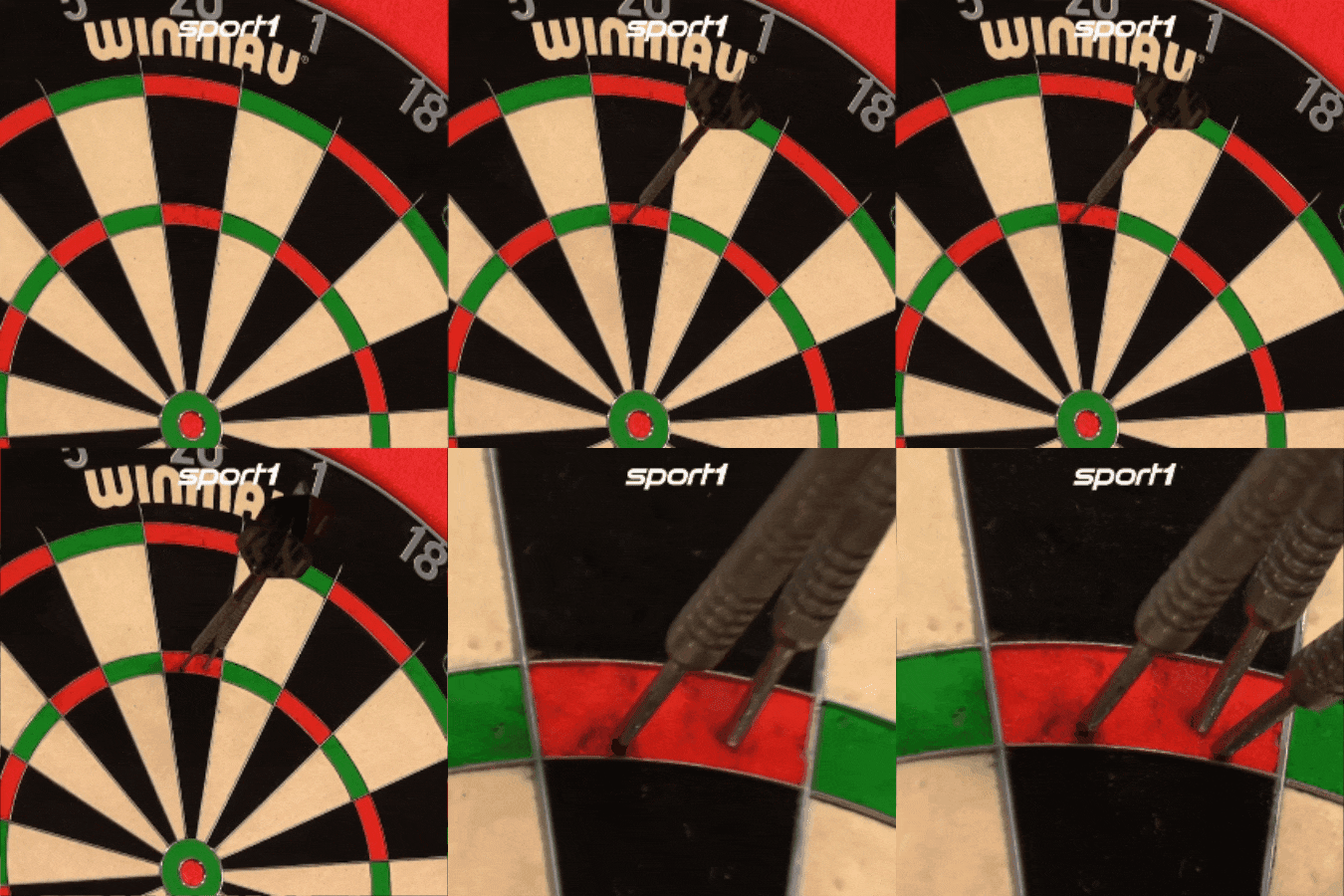
But the league was too successful. It physically dominated the space. If you weren’t on a team, finding a seat was a gamble, and the energy in the room was dialed up to a level that made a “quiet pint” impossible. Without a doubt, these are good problems for a nine-year-old business that has been forced to reinvent itself again and again.
We solved the Wednesday problem in the short term, but in doing so, we inadvertently “trained” our non-dart regulars to stay home. We broke their habit. Now that the league has wrapped up for the season, we are left with the void: the dart folks are taking a well-earned break, and the “old” regulars are still operating on the assumption that Wednesday is “Darts Night.” I already have plans on how to get the room full again on Wednesday, but this is the dance.
Welcome to the Experience Treadmill.
The Death of “Good Enough”
In the early days of the craft beer boom, the business model was simple: Make good beer, turn the lights on, and wait.
Those days are over. In a world of infinite options and inflationary pressure, “good product” is no longer a differentiator; it is the entry fee. To get people off their couches and into your seats, you have to offer an experience. Trivia, live music, dart leagues, fundraisers, euchre—we’ve done it all.
But there is a hidden cost to this innovation. When you move from being a “Product” business to an “Entertainment” business, you stop being a part of someone’s daily habit and start being an “event” on their calendar.
The Macro View: Tentpole Churn
This isn’t just a brewery problem. It’s a structural challenge for almost every modern business, even huge corporations.
Look at Netflix. The streaming giant spends billions on “tentpole” content—shows like Stranger Things or The Mandalorian (for Disney+). These events drive massive spikes in new subscriptions. Wall Street cheers the growth.
But the moment the season finale airs, the “Experience Treadmill” kicks in. A significant percentage of those new users cancel. They weren’t loyal to the platform; they were loyal to the event. This forces the streamers into a “Red Queen” race: they have to run faster and spend more every year just to keep their subscriber count from shrinking. They’ve trained their customers to “binge and bolt” rather than stay for the library.
On a smaller scale, look at Boutique Fitness Studios. A local yoga studio might bring in a “Star Instructor” for a specialized 6:00 PM Wednesday class. The room is packed, and the revenue per hour is at an all-time high.
But the “logistics of success” kick in. The regular members who used to come at 6:00 PM for a quiet, general workout find the room too crowded. They can’t get their favorite spot. After three weeks of feeling “dislocated,” they find a new gym. When the Star Instructor eventually moves on or the class ends, the studio owner looks around and realizes they didn’t just lose the class; they lost the “background” members who were the foundation of the business.
The “Responsive Tax” on Habits
In my previous post, I talked about the “Responsive Tax”—how small businesses are held to a higher standard because we have a face. The same applies to habits.
In economics, we talk about Switching Costs. Usually, this refers to something like the difficulty of moving your data from an iPhone to an Android. In the world of small business, the switching cost is mental. A regular’s “habit” is a moat. It protects your business from the competition. But that moat is fragile. It takes months to build a Wednesday night habit and only one or two “inconvenient” experiences to break it. If a regular drives to the brewery, sees a full parking lot or a taproom taken over by a league, and keeps driving—they’ve just lowered their switching cost to zero.
By solving our Wednesday revenue problem with an event, we unintentionally lowered the switching cost for our “Mug Club” regulars. We gave them a reason to try the brewery down the street or, more likely, stay home and save the $20.
Re-training the Room
Before I go further, I want to be clear: we appreciate every single person who joins us for a night. Whether you are here to throw a high-ton in darts, spin a record on vinyl night, battle it out at trivia, or just sit quietly with a pint of your favorite IPA—you are the reason we do this. Every customer brings a different energy to the taproom, and we need all of it to keep this community engine running.
Innovation is mandatory. We will continue to host leagues and try new events. To ignore “programming” in 2026 is to choose a slow death.
But the lesson of the $130 Wednesday is that we have to be more tactical about how we innovate. We have to find ways to attract new regulars without “dislocating” the ones we already have and are therefore more sustainable. We have to ensure that our outreach events are sustainable.
This week, we are back to work “re-training” the room. We’re reaching out to those Wednesday regulars, reminding them that their favorite seats are open again. It’s harder to restart a habit than it is to keep one, but in this economy, the “habit” is the only thing that survives the treadmill.
Life, like a taproom, is about balance. You need the noise of the league to find new blood, but you need the quiet of the “Mug Clubber” to keep the lights on.
Micro Brews. Macro Views.
Dave
Got it! On my way!